Smart Money Concepts (Order-Blocks)
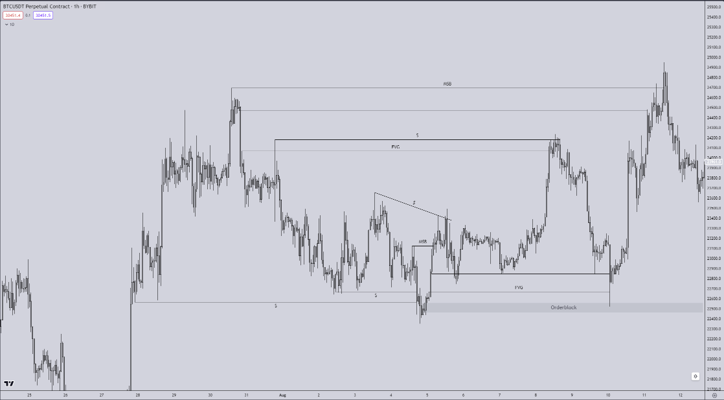
If you have been around the trading space, or on twitter, it is likely that you have encountered SMC/ICT traders.

(youtube)
The main premise of SMC/ICT is that “smart-money” is controlling the price and candle formation of an asset to engineer liquidity and make systematic profit through manipulation.
The trading system has arguably transcended that of a trading strategy into some kind of quasi-religious ideology around ICT and the idea of algorithm/market-makers acting as a financial deity controlling everything.
Many of you reading this probably are SMC traders. Well, I am not trying to start a fight here so I will keep shorten it to these main points:
Largely a fad system.
The “banks” are not trading with these concepts.
Market Makers are not evil entity's moving the market. It is all a marketing gimmick. A market maker’s job is to provide liquidity and profit off the spread.
Its not some secret “area-51” undercover strategy used by institutions. I would argue that most retail traders are now trading with these concepts. It has actually become so popular that many companies have piggy-backed the hype and developed various indicators and software to sell to traders thinking they are institutionally trading.
This probably goes without saying but for those who need me to confirm: “Institutions are not hunting your stops on a 1min Dogefart chart”.
A few parts of the strategy is actually quite solid as it highlights repetitive market behaviours that show as patterns on candlestick charts. A lot of the strategies existed before SMC, just without the SMC language. – The strategy is clearly not a scam, it’s had many positive results and many have attributed it to their success.
As far as I am concerned SMC was created by ICT in his bedroom, not by some InTeRbAnk pRicE dEliVeRy aLgOriThm. To give credit, ICT is a fantastic teacher, his lessons are filled with charisma and aura. He also gives solid information regarding psychology and risk.
It does look and sound “cool”.
In conclusion SMC/ICT is a retail trading strategy. You are the retail trader. You trade retail patterns and call it Smart Money.
Orderblocks
One of the main concepts of SMC are order-blocks, which are supposed to be the levels that "smart money" use for buying and selling.
While I disagree with the idea that a omni-potent Market Maker is creating “Institutional Candles” to buy and sell from. There is some truth to the concept, just without the mysterious smart money buzzwords.
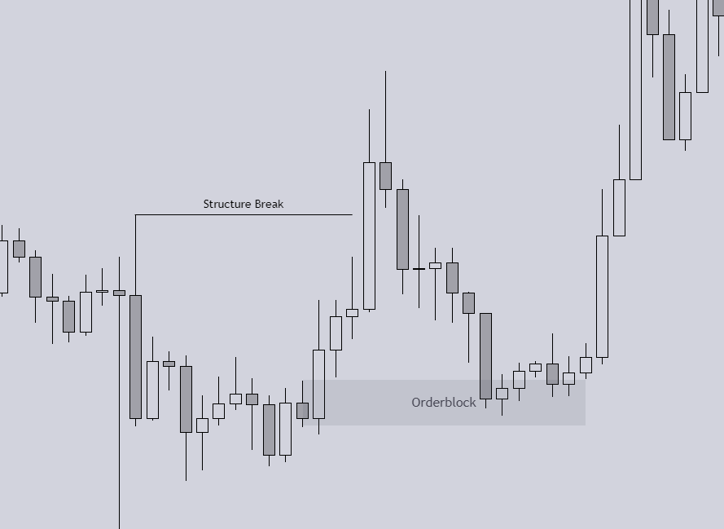
“Orderblocks” have existed before the term orderblock, FTR zones, S&D blocks etc.
It is the last candle of the opposite direction before market makes a impulsive move to either the upside or downside breaking the local market structure.
The idea is that “smart money” use these magical candles to accumulate their positions.
Now while this isn’t entirely true, it isn’t entirely false.
Orderblocks - Why do they appear to work?
Order-blocks = Order-splitting
In short, I cannot say with confidence that the SMC model does work in first place. Here are the results of my own testing of Order-blocks utilising SMC concepts as confluent signals.
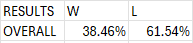
W:wins L: Losses
Signals used:
FVG as displacement after a opposite sign candle.
Market Structure Shift or Break of Structure
Discount and Premium range.
Interestingly, the success rate improved when market structure was removed as a criteria.
But admittedly I do not trade this way therefore my results are not reliable nor valid.
That being said, the idea of order-blocks is not far from the truth. I believe the idea is a derivative of a known term and execution strategy called order-splitting.
Order-splitting in financial markets refers to the practice of breaking a large trade order into smaller parts, known as "slices" or "child orders," and executing them separately.
Commonly used by institutional investors, traders, and brokers to minimize the impact of their large orders on the market and improve the likelihood of obtaining more favourable execution prices.
The process of order-splitting is often automated and handled by sophisticated trading algorithms.
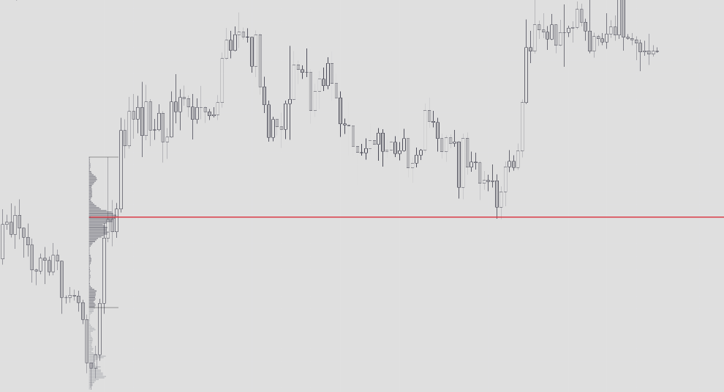
“Order splitting is the practice of dividing a large order into a series of smaller ones” – Investopedia.
Why Do Traders Split Orders?
The primary reasons for employing order-splitting techniques include:
Reducing Market Impact: Large orders have the potential to significantly affect the supply and demand dynamics of a particular security. When a substantial order is placed in the market, it can lead to substantial price movements, known as "slippage." By splitting the order into smaller pieces, the impact of each slice on the market is reduced, minimizing the price disruption caused by the overall trade.
Hiding True Intentions: Institutional investors and large traders may wish to keep their trading intentions private to avoid tipping off other market participants about their positions. By splitting the order, it becomes more challenging for others to discern the true size of the total order.
Improving Execution Price: Smaller orders can be executed at more favourable prices compared to large ones, especially in markets with limited liquidity. Order-splitting allows traders to target smaller price levels in the market and potentially achieve better overall execution prices.
Risk Management: In rapidly changing markets, large orders may be vulnerable to unfavourable price movements. Order-splitting can help manage this risk by executing smaller orders over time, allowing traders to assess the market conditions more frequently and adjust their strategies accordingly.
Accessing Multiple Venues: Splitting orders can enable traders to execute parts of the order across multiple trading venues or exchanges, which may offer better liquidity and pricing opportunities.
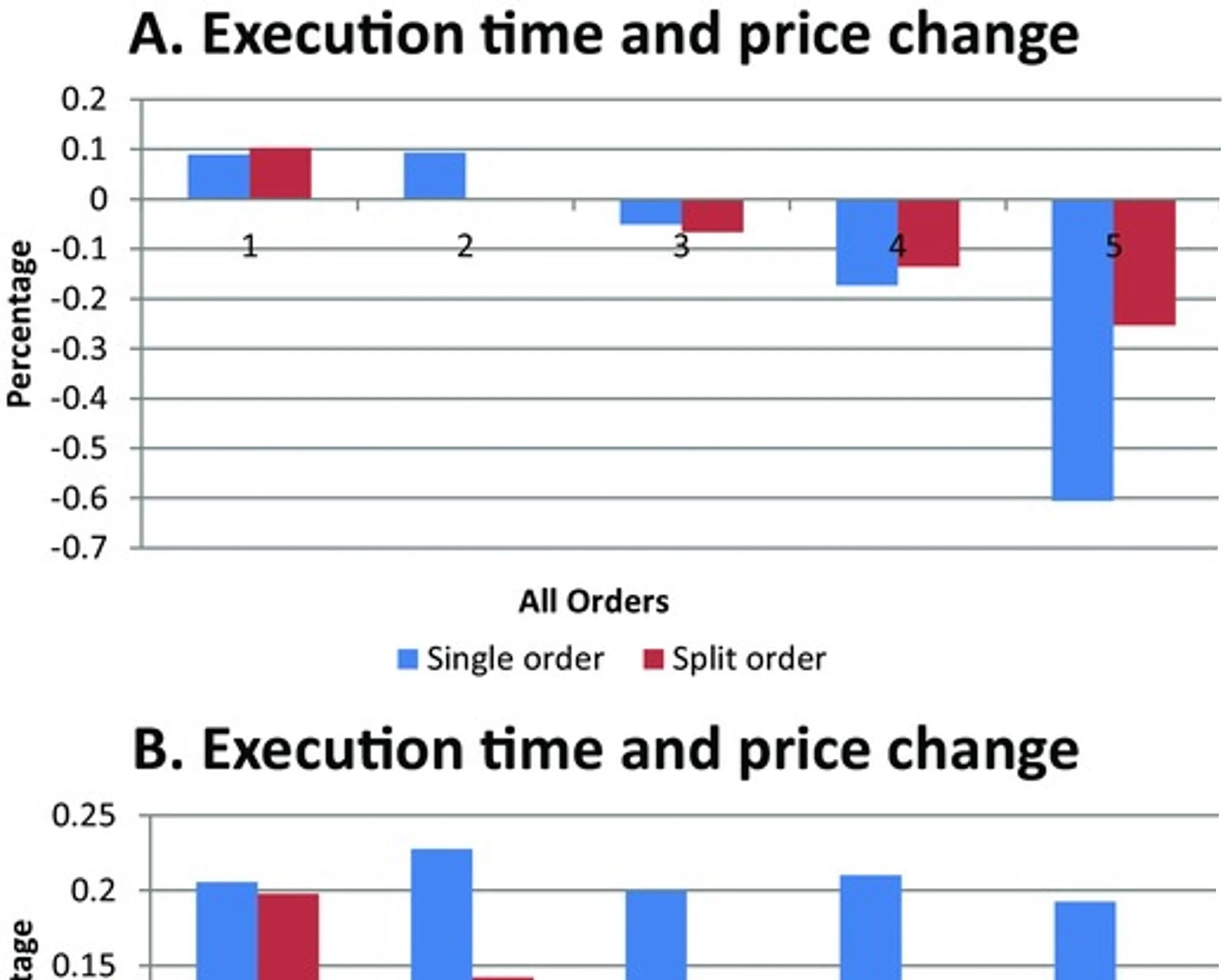
(2017 Why do traders split orders)
References
Garvey, R., Huang, T. and Wu, F. (2017), Why Do Traders Split Orders?. Financial Review, 52: 233-258. https://doi.org/10.1111/fire.12133
Vincent van Kervel, Amy Kwan, P. Joakim Westerholm, Order splitting and interacting with a counterparty (2023). https://doi.org/10.1016/j.finmar.2023.100850
