Auction Markets

Most of the world's markets are auction based, e.g. futures, options, debt and equities, derivatives, etc. The Auction market dynamic is created by the participants. Daily price range is determined through negotiation between the buyers and sellers.
As price is negotiated, some prices are accepted by the marketplace and met with heavy volume and willingness to transact at the level, some prices are rejected. Rejected prices, like the highs and lows, are seldom traded and generate little interest.
By trading many times throughout a day, accepted prices establish value.
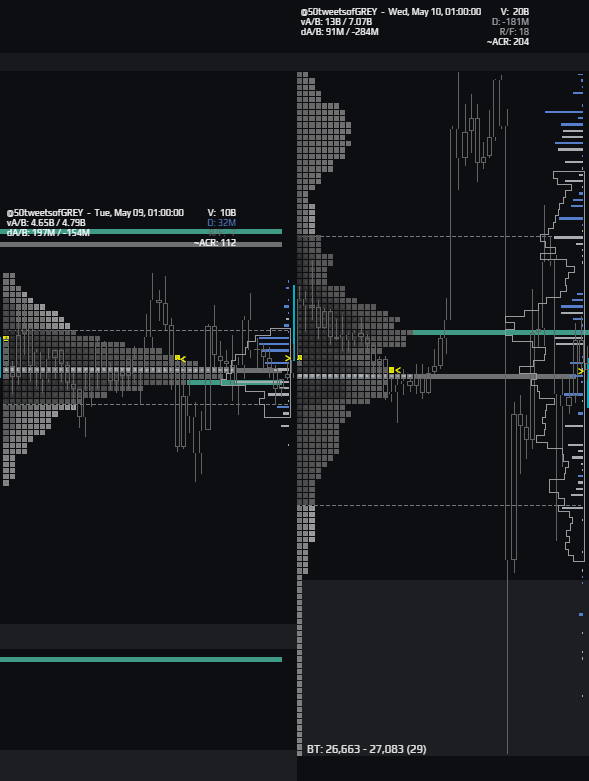
The primary aim of Auction Market Theory is to identify the characteristics of short timeframe non-equilibrium auction markets and to present a coherent description of their behaviour. Achieving this goal will place market analysis on a quasi-quantitative basis, removing the mystique and misinformation surrounding market activity. It develops a formalised procedure to utilise current market knowledge as a guide to future for trading. Crucially, the approach is empirical, it is identifiable, and it is observable.
It can be catalogued and interpreted to provide a structurally sound market analysis that can be directly applied to real world situations. Auction Market Theory analysis identifies the salient elements of a market; including value, market condition, risk, volatility and other items in a market's structure. With Auction Market Theory these market elements can, in turn, be used to generate a business process for trading.
